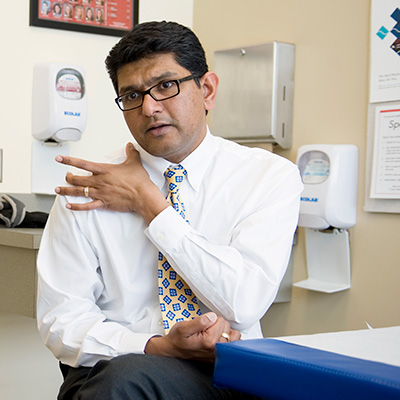
Physiatrists are specialists in diagnosing and treating problems of the musculoskeletal system and its neurological control.
About
Acute Rehabilitation at Cayuga Health
Physical and Medical Rehabilitation Unit (PMRU) at Cayuga Medical Center is an Acute Rehabilitation Unit that helps prepare you to cope with changes in lifestyle following trauma or illness. The rehabilitation team consists of Physiatrists, nurses, hospital aides, social workers, Speech Pathologists, Occupational Therapists, Physical Therapists, and Recreational therapists. You and your family are the most important members of the Rehabilitation Team and all the activities of the unit revolve around your needs, with your family in a vital supporting role. Our goal is to help you regain as much function and independence as possible. Your medical diagnosis may always remain the same; however, your functional level can improve through the combined efforts of you, your family and the Rehabilitation team. Together we will help you acquire new skills and adjust to your new situation.
Why Choose Acute Rehabilitation at Cayuga Health
Our Acute Rehabilitation unit is conveniently located within Cayuga Medical Center, providing rehabilitative services to our community for over 22 years. We have an experienced and board-certified rehabilitation team. We are regional leaders in patient outcomes and approach each patient individually to meet their specific needs and provide person-centered care.
Acute Rehab vs Subacute Rehab
What separates Acute Rehab from Subacute Rehab is location, intensity of therapies, and medical management and supervision of your condition. Acute rehab units are generally located in a hospital setting with daily supervision and medical management of conditions by a Physiatrist, or a medical doctor that specializes in rehabilitative care. Therapy in Acute rehab is multi-disciplinary, comprehensive, and more intensive, with participation in therapy for at least 3 hours per day for up to five-six days per week. A Subacute rehab facility is most often located in a Skilled Nursing Facility with less supervision from a medical doctor, usually without specialization in rehabilitative medicine. Frequency and intensity of therapy in subacute rehab is less intensive.
Some reasons patients come to rehab after a hospital admission:
- Injuries and conditions: Strokes, head injuries, spinal cord injuries, post-surgical and fracture recovery, surgical amputations.
- Diseases: Cancer, Multiple Sclerosis, Parkinson’s disease, Heart and Lung Diseases.
Team Consists of:
- Physiatrists
- Rehabilitation Nurses
- Speech Pathologists
- Occupational Therapists
- Physical Therapists
- Recreational Therapist
- Social Worker
- Nursing assistants
How to Become a Patient
After a life-changing illness or injury, ask your provider to be evaluated for admission into our Acute Rehab facility. You will then be evaluated by an appropriate provider, case manager, and most likely physical and occupational therapy to determine if intensive, acute rehabilitation is appropriate for you. If accepted, you will be transferred to Acute Rehab as soon as you are medically stable.