What You Need to Know About Hip Fractures
by Deidre Blake, MD
There are roughly 300,000 hip fractures every year in the United States and this number is projected to reach 500,000 by 2040. Eighty-five percent of these fractures occur in people who are 65 years of age and older, associated with 25 percent mortality within five years of fracture. It is extremely important for people to understand that hip fractures are serious and life-changing for the patient. The good news is that there are a number of positive, preventive measures you can take to reduce your risk for hip fracture.
What are the most common causes of hip fractures?
Most hip fractures result from falls from a standing height. The fall can be caused by icy pavement, liquid on the floor, a loss of balance, and tripping over items on the floor. Other hip fractures are caused by high-energy trauma, such as car accidents or falls from ladders. A number of my hip-fracture patients have tripped over their small dogs.
Why are people 60 and older at greater risk of suffering a fracture?
One of the main reasons for a higher hip fracture rate is osteoporosis, which causes bones to lose density and therefore fracture more easily. Sense of balance tends to diminish in our senior years and we may not see or hear as well as we used to. Reaction time also slows down as we age, which makes falls more likely.
What preventive steps can I take to reduce my risk of falling?
1) If you feel that your balance is not what it should be, go straight to your doctor and get evaluated further. There are a number of medical reasons for loss of balance. If you or your doctor thinks you need a cane or a rolling walker, get one. If a family member or friend needs a cane or walker, be positive and encourage that person to use it because it could prolong his or her life. I have treated far too many people who fractured their hips because they were too vain to use a cane or walker.
2) If you have fallen more than once, ask your doctor about physical therapy for gait training. This will strengthen your muscles and improve your balance and proprioception, which is your body’s way of sensing position and coordinating your movement.
3) Consider learning tai chi. This is a Chinese martial art form that, when practiced slowly and gently, is known to improve balance and decrease the risk of falling in seniors. This is not a high impact sport and is safe for most people.
4) Have a visiting nurse come to your house to identify tripping hazards and recommend placement of handrails. Get rid of loose throw rugs and install railings to help you stay on your feet. The goal is to prevent a fall.
5) Include calcium and vitamin D in your daily diet or vitamin supplementation to help keep your bones strong.
What if I fall and am in pain?
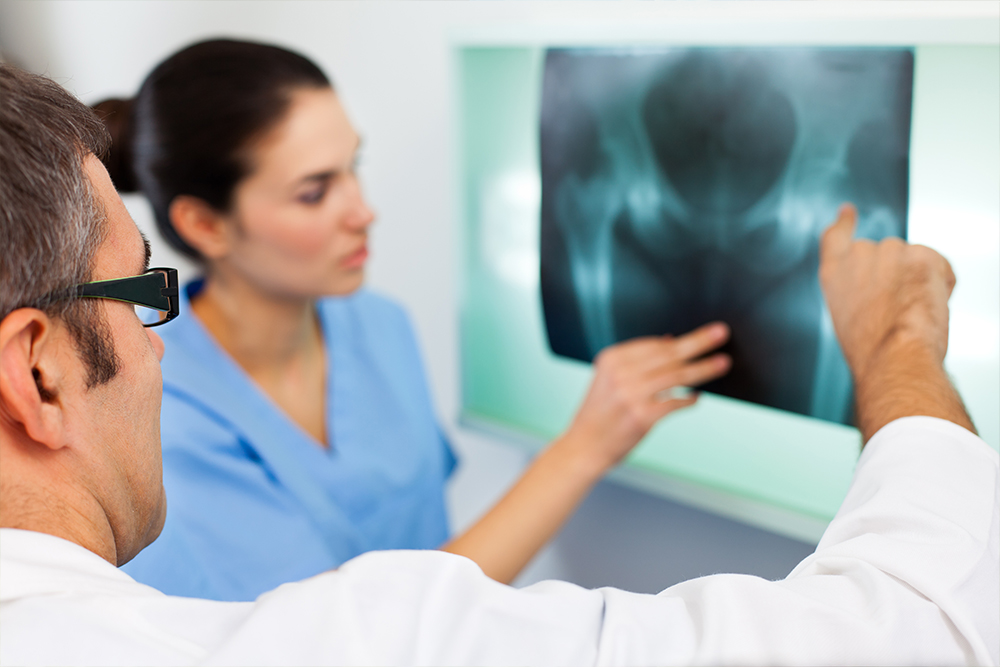
If you fall and are injured, call an ambulance and get to the hospital where a doctor can determine if you have broken your hip. Most hip fractures require surgical repair. There are essentially three different types of hip fractures, determined by the exact location of the injury on the proximal femur (top of the thigh bone), and the procedures to repair them differ. At Cayuga Medical Center we have orthopedic specialists on our medical staff who perform these procedures routinely.
What happens after surgery?
Patients with hip fractures go from the recovery room to a surgical floor. For patients who need inpatient rehabilitation, our hospital has one of the best Physical Medicine Rehabilitation Units in the country. Following release from the hospital, recovering hip fracture patients have outpatient physical therapy in their home or at a physical therapy center.
We do an excellent job with hip fractures at Cayuga Medical Center. Our orthopedists are well trained and experienced. Our inpatient and outpatient physical therapists are top notch. If you suffer a fractured hip you do not have to travel out of town for care. We have all of the services you need right here.
Dr. Blake is board certified in orthopedic surgery, has special expertise in hip and knee joint replacement/ revision surgery, and serves on the medical staff at Cayuga Medical Center. She practices with Orthopedic Services of Cayuga Medical Associates and can be reached at (607) 272-7000.


Related News


what our patients are saying
“The staff and accommodations at Cayuga Birthplace are amazing!!! This is what it I imagine it would feel like to be a celebrity getting VIP treatment. I wish I could stay longer – even the food options are 5 Star! The amenities are great. Everything is clean and designed beautifully. Not a single complaint, only praises!”
“I have been a Hemo dialysis patient for almost Five years. Prior to dialysis and during dialysis I have had several trips to the ER, due to other health issues & was admitted to CMC more than a few times. Each and every time I’ve been there, whether in patient or out, I have been treated with respect, professionalism, and efficiency. I give this hospital 2 thumbs up!! Thank you CMC for taking care of me all these years!!”
“I have had many occasions visiting CMC for myself and family. We have never had a bad experience there at all. Last October I had surgery and the nurses were amazing especially my night nurse. Thank you to all CMC staff for doing what you do every day with a smile.”
“I have to say the last couple visits that I’ve had here have been wonderful. About a month ago I had an EGD and the staff were amazing! Explained everything in detail and made me feel at ease. I was very nervous and the nurse I had was very comforting. Tonight we had to take my son to the emergency room and they were awesome with him! We got right in. “